Who am I.
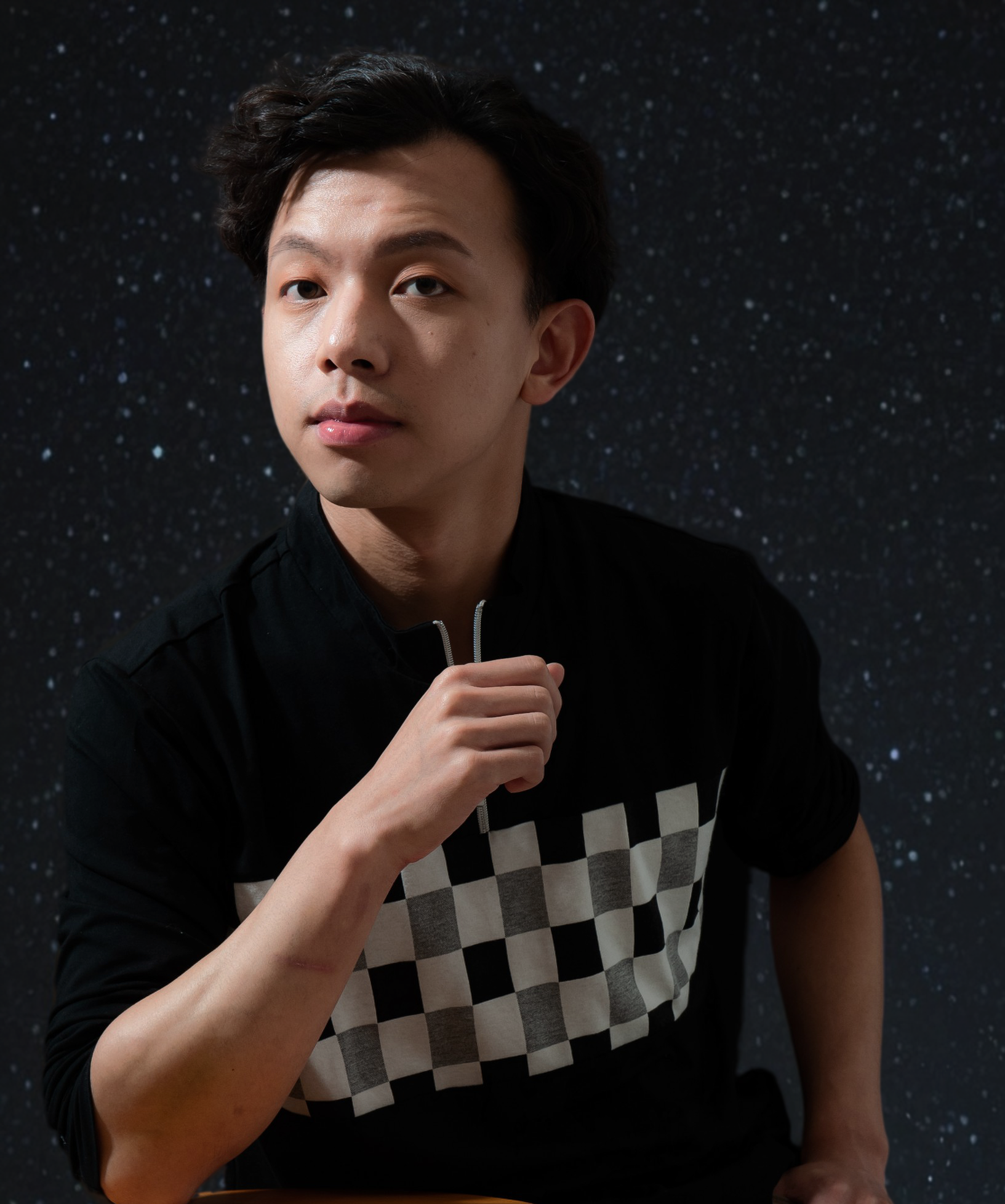
Hi, my name is Howard Chen, and I am an Assistant Professor of Space Sciences
(Astrophysics and Planetary Sciences) at the Florida Institute of Technology, located on Florida’s beautiful
Space Coast, just 40 minutes from NASA Kennedy Space Center. My research involves studying the formation, atmospheres,
dynamics, and habitability of exoplanets through primarily theory and modeling, and the occasion use of observational data.
Before joining Florida Tech, I was a NASA Postdoctoral Program Fellow at the Goddard Space Flight Center (GSFC) in 2023.
I received my Ph.D. in Earth and Planetary Sciences from Northwestern University in 2022, supported by a three-year Future
Investigators in NASA Earth and Space Science and Technology (FINESST) Research Award. Prior to that, I earned my B.A.
in Physics from Boston University in 2016.
I was born in Taipei, Taiwan, and grew up between beautiful Vancouver and rural Taiwan before moving to the United States for high school
and college. My parents, a countryside doctor and an ecologist, nurtured both my curiosity for science and my appreciation of the natural
world, an influence that continues to inspire my work today.
My Research Interests.
"The wonder is not that the field of stars is so vast, but that man has measured it"
- Anatole France, 1844
Click the buttons to read our papers.
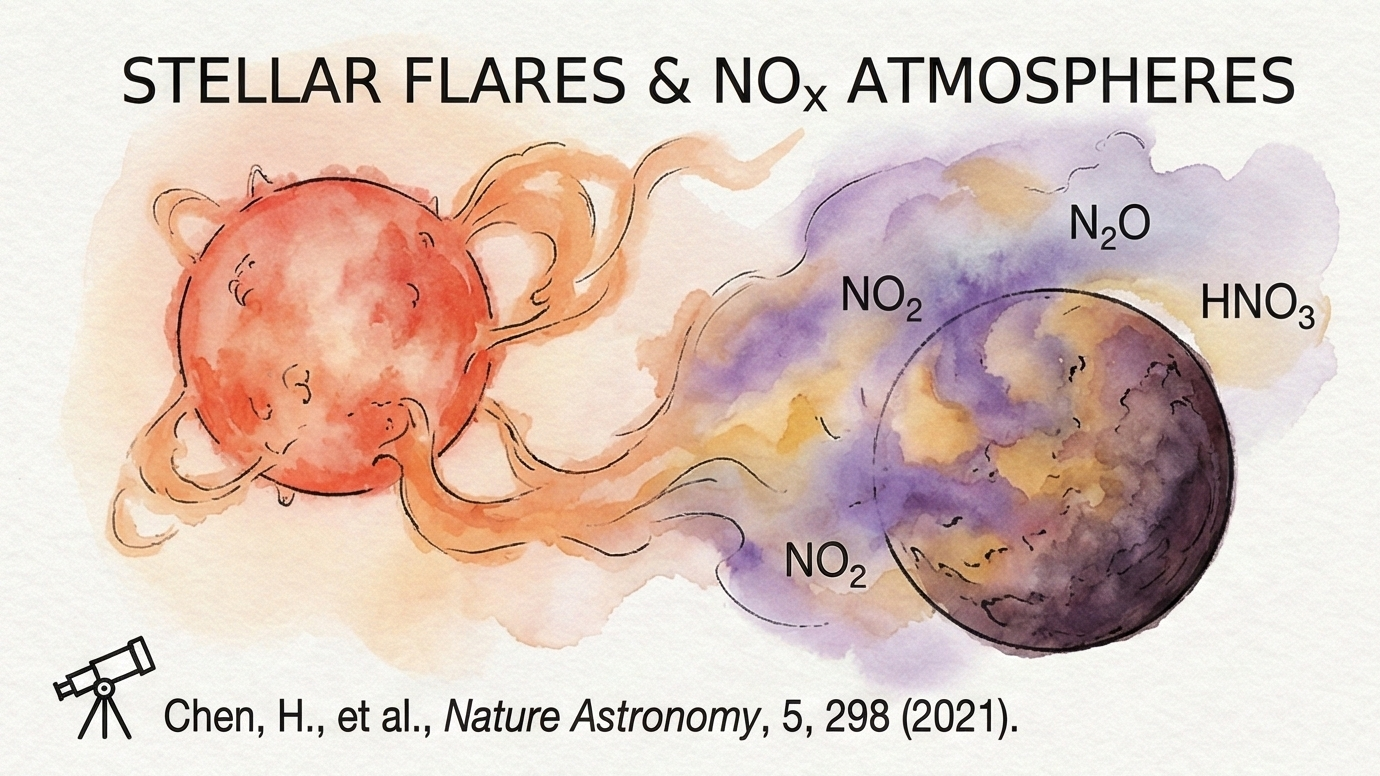



How stellar activity affects exoplanet atmospheres.
We used 3D chemistry–climate models in conjunction with observational measurements of distant stars to understand the affects of large stellar flares on atmospheric chemistry.
Read the paper
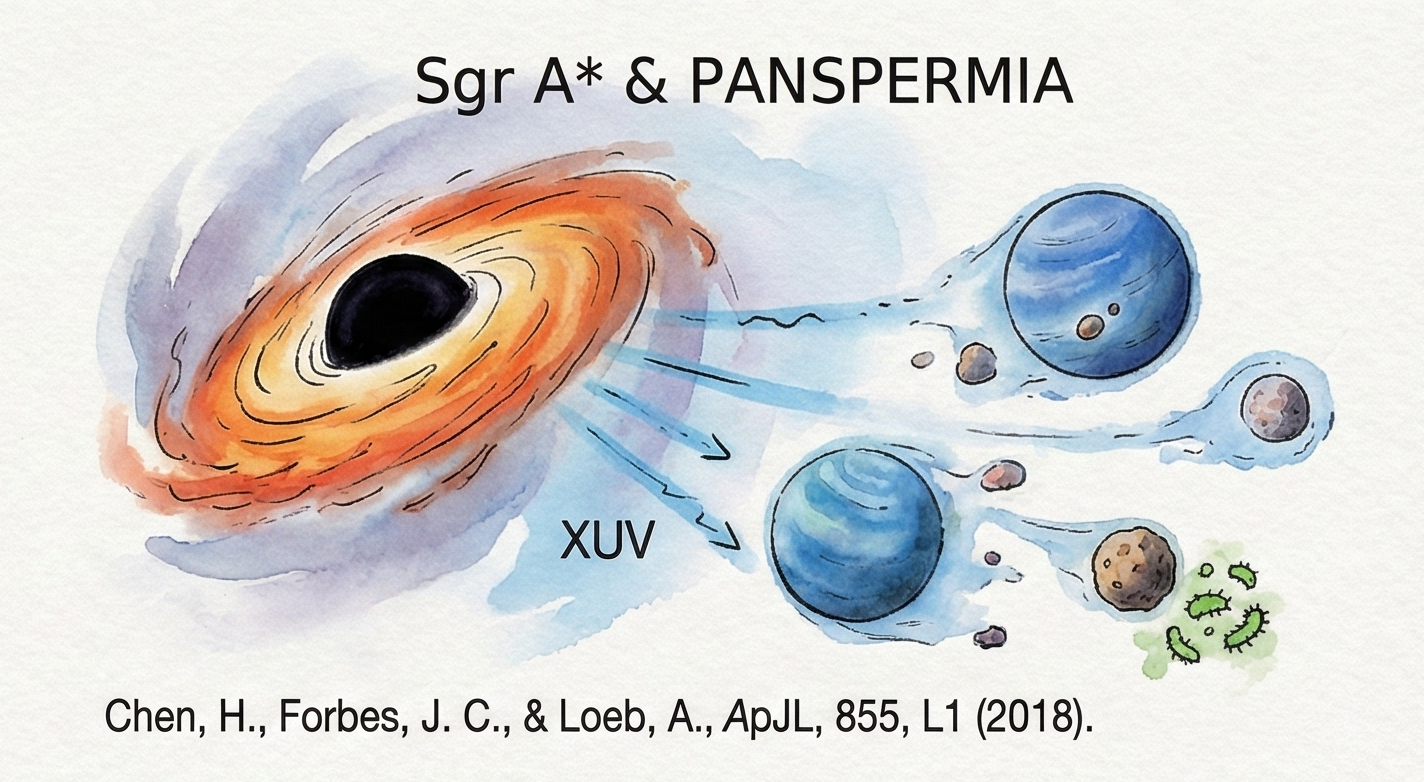
Habitability across the Milky Way.
We modeled how the dense center of spiral galaxies, such as the Milky Way, influences planetary formation and evolution.
Read the paper Read my contributed book chapter
Applying 3D chemistry-climate models (CCM) to understand planetary habitability.
Using a suite of 3D climate and chemistry models, we simulated the distribution of biosignature gases and the effects of spin–orbit dynamics on planetary glaciations.
Read paper #1 Read paper #2
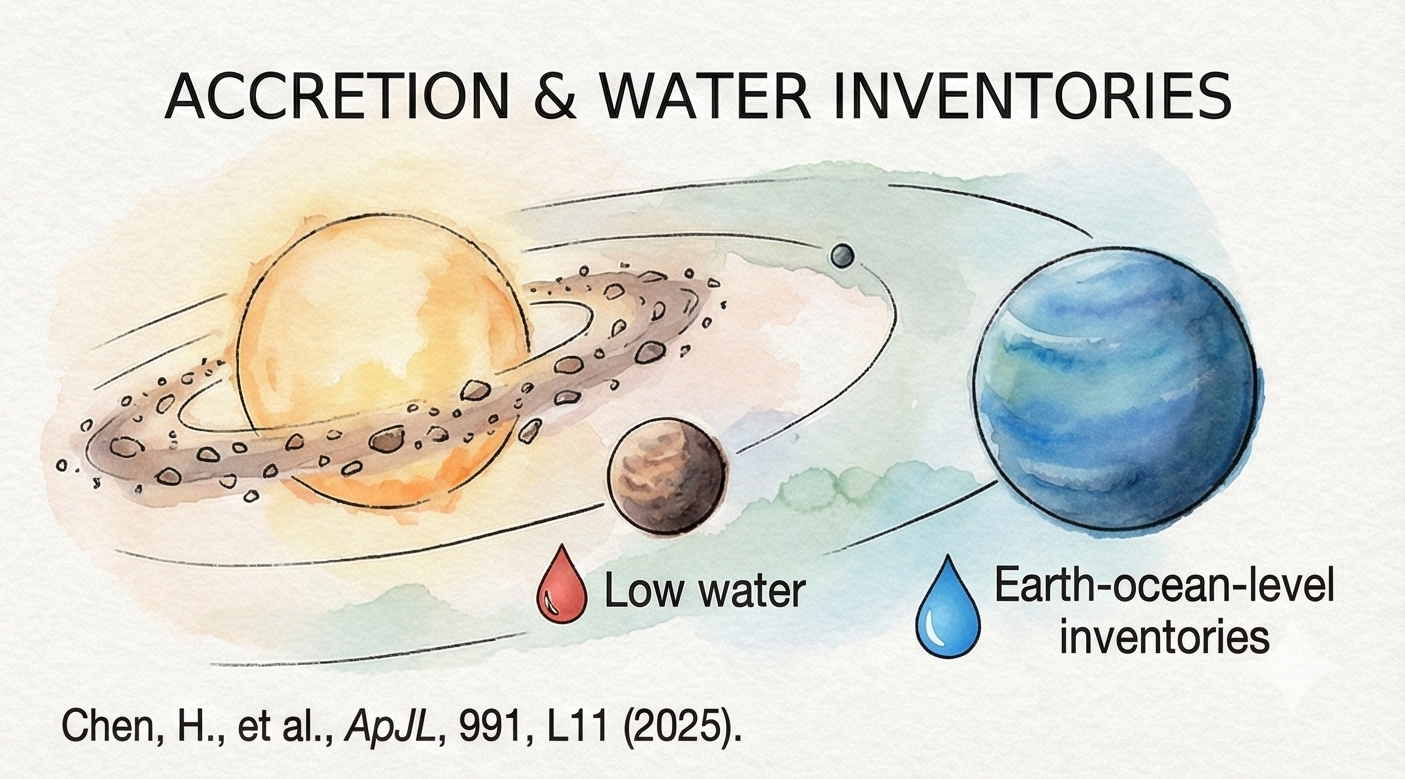
Volatile Accretion on Forming Young Worlds.
We integrated N-body accretion simulations with a volatile growth/loss model to calculate the range of possible N₂, CO₂, and H₂O combinations on TRAPPIST-1–like compact systems.
Read the paper
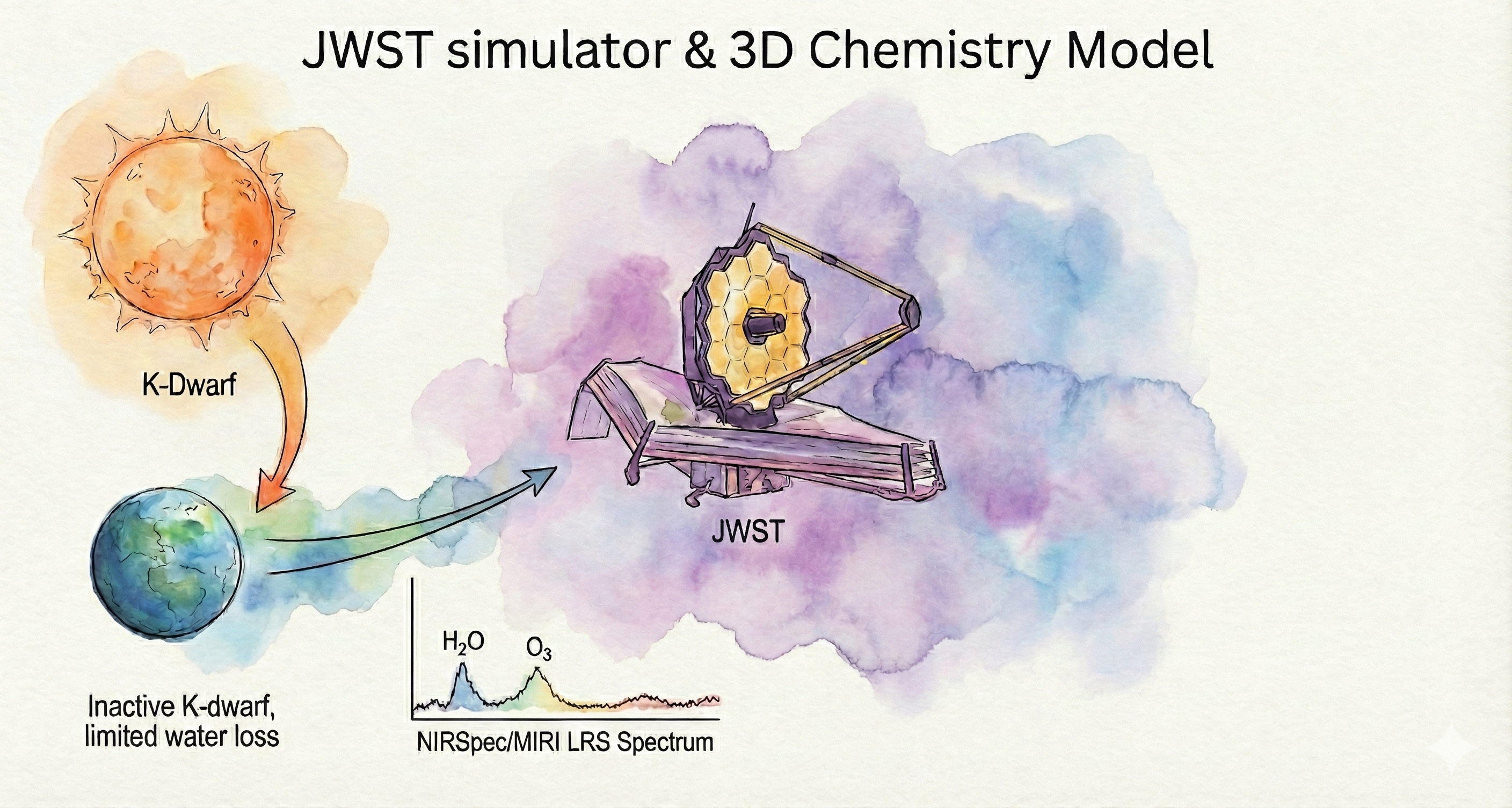
Modeling JWST transmission spectra of terrestrial planets.
We employed 3D high-top chemistry-climate models to simulate synchronously locked planets and model their transmission spectra through the eyes of the new James Webb Space Telescope.
Read the paper
Interior structure & atmospheric escape from Neptunes.
We modified and used stellar evolution models to calculate the interiors of photoevaporating sub-Neptune sized planets, also known as "Kepler planets".
Read the paperWhy Florida Tech?
Teaching.
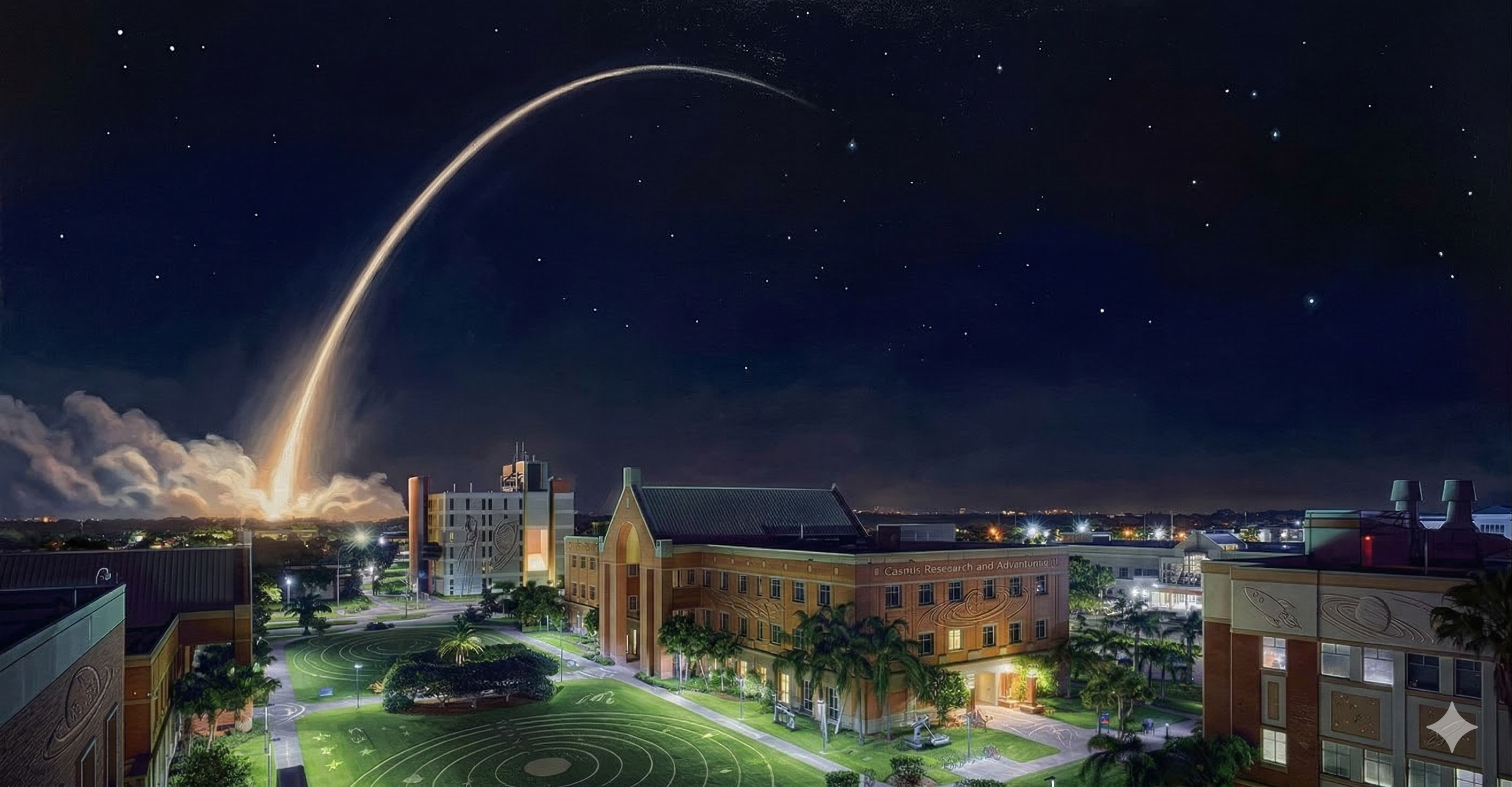
Florida Tech is one of the few institions in the world that offer degrees across astronomy, astrophysics, astrobiology, AND planetary science. As such, I have taught a broad range of courses across physics and planetary sciences at both the undergraduate and graduate levels.
In my introductory courses such as PHY 2001/2002, I emphasize conceptual grounding using visual intuition and real physical examples to help students understand difficult ideas.
In intermediate and advanced classes, I integrate computational modeling and research-style problem solving to prepare students for scientific work. At the junior/senior level, I have taught SPS 3010 Geo & Planetary Physics and SPS 4031 Planet Formation.
I have also developed and taught specialized upper-level electives, such as SPS 5031 (Exo)planetary Atmospheres, that blend lectures, student presentations, and current research.
Please feel free to contact me if you are interested in sampling my current or previous teaching materials.
Outreach.
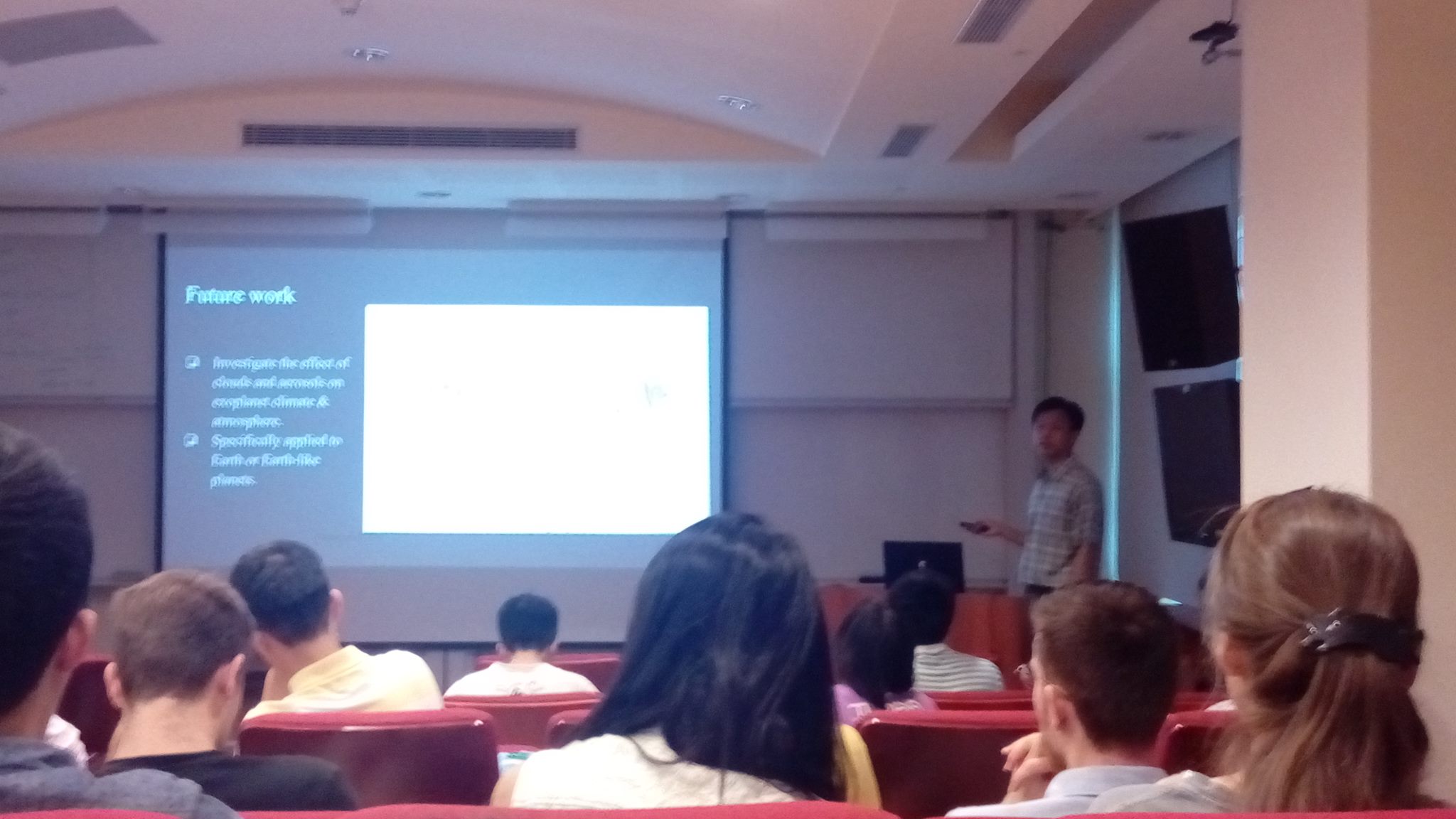
I am the lead developer of lesson plans for the non-profit
organization
Only One Sky. These courses are aimed at grade school and
middle school aged students. The overarching goal is to combine
art and science to inspire wonder about the Earth and sky, and
transmit the importance of scientific inquiry in today's society.
Here is an example of but one out of many contributions I have
made to the Only One Sky Organization:
Lesson on Stars.
During my graduate student career, I was involved in many organzations
focused on the Chicag-area. I was an active participant in CIERA's
summer
high school research program.
I also volunteered at Niles Township High School District, specifically
being a part of the Ask an Expert Day at
Niles North High School.
Conference Presentations.
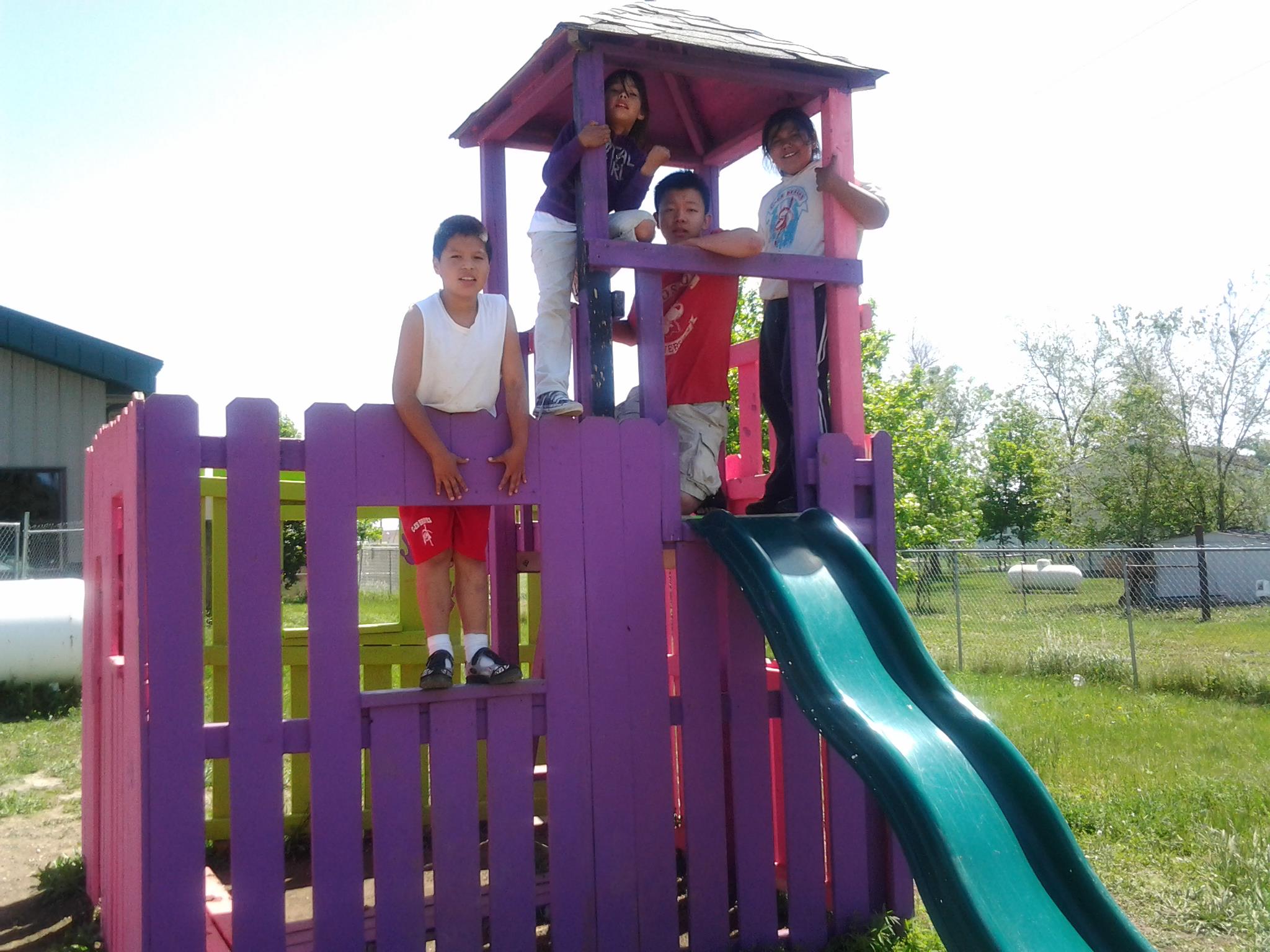
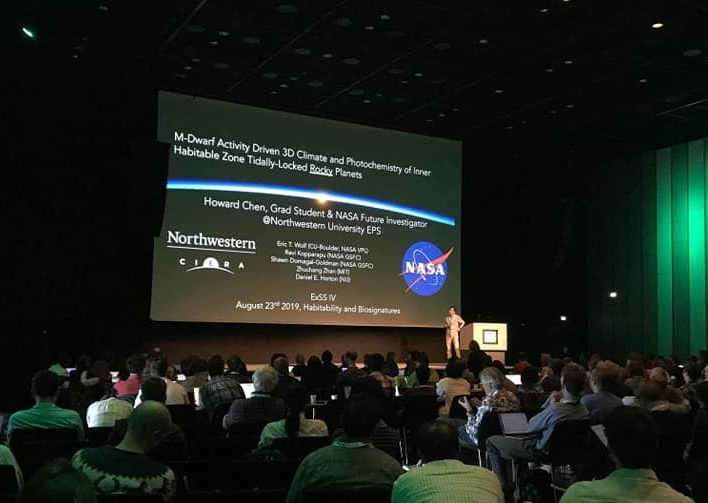
I have been fortunate enough to present my research at many major astronomy & exoplanets conferences. Some venues include Extreme Solar Systems IV in Reykjavik, Iceland (pictured to the right) in 2019, AOGS in Singapore (2023 and 2025), and ExSS V in New Zealand in 2024.
Media Appearances.
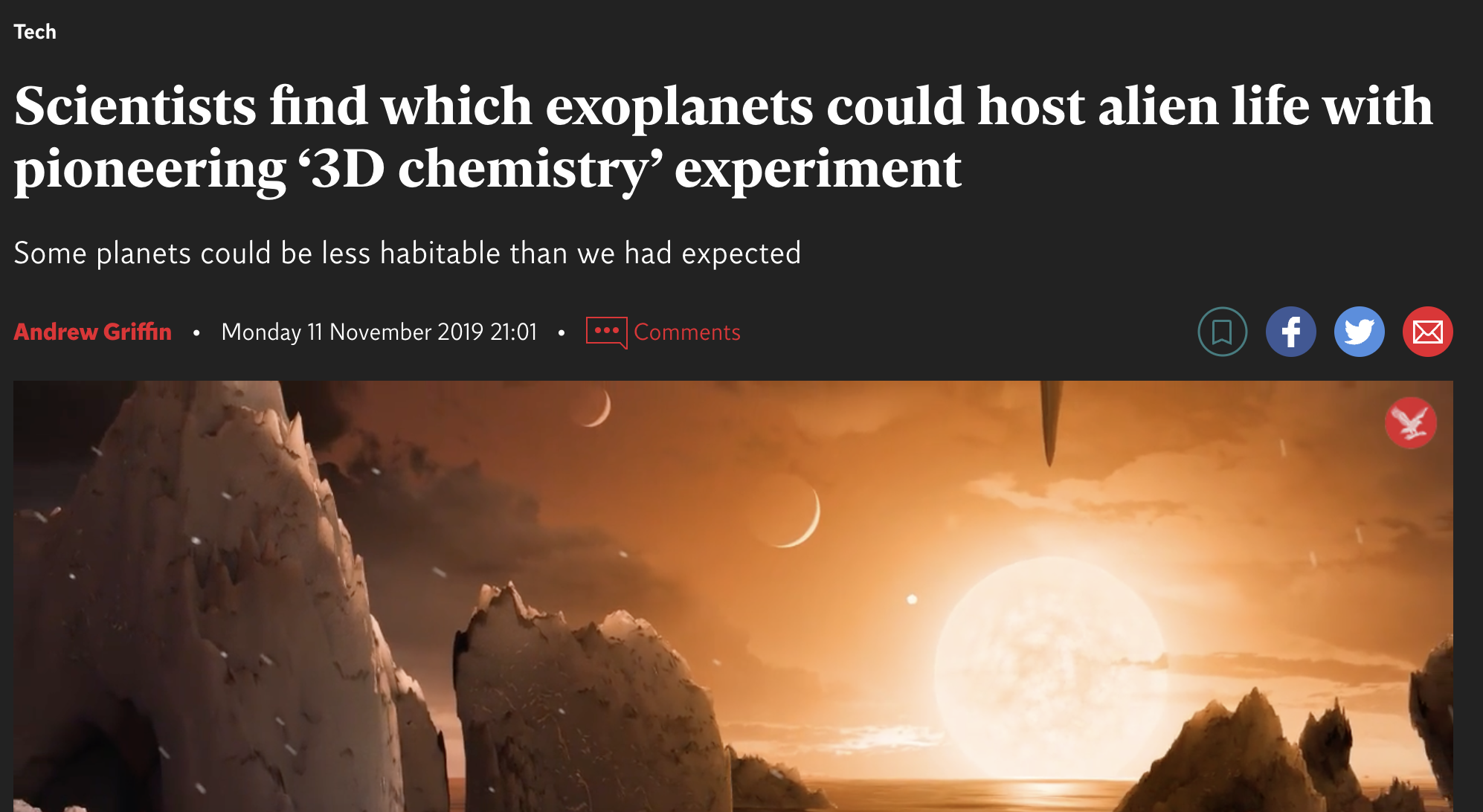
My work has attracted some media attention over the years! In particular, I have had my work on the habitability of exoplanets covered by news outlets such as CNN (latest 2025 CNN interview), CNN (back in 2019), Newsweek, The Independent, and Geekwire. My work with Avi Loeb has been covered by Space.com and Physics Today.
Outside of work.
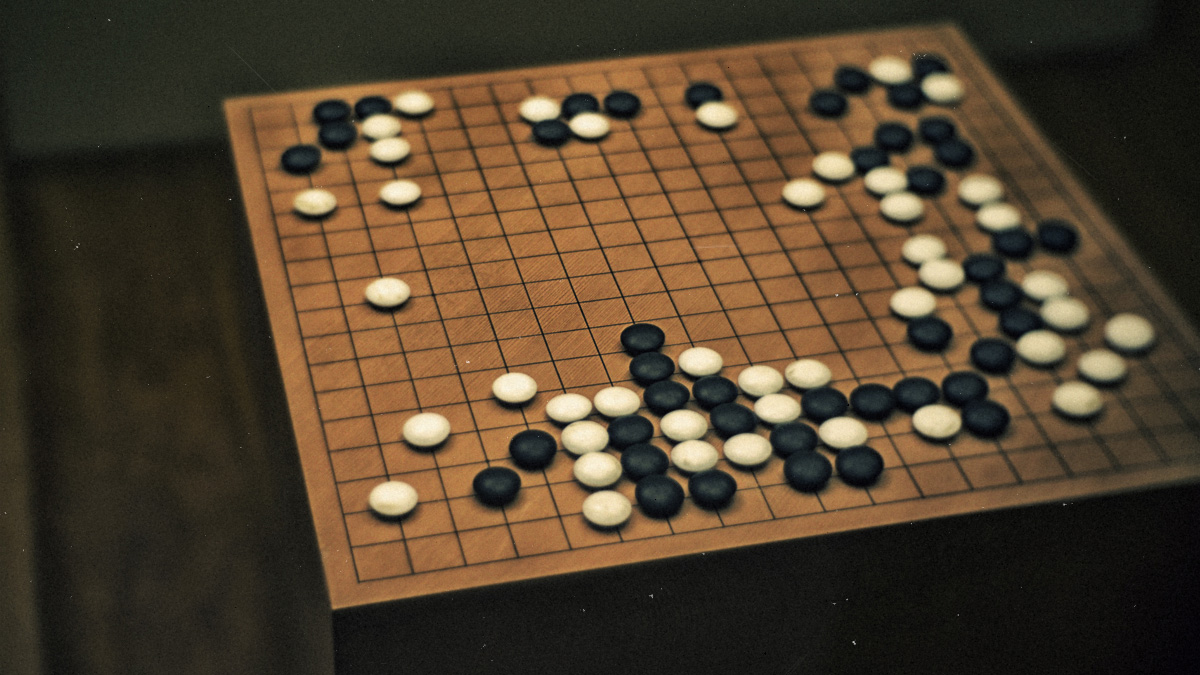
I am an avid (but casual) Go player.
As a child, I was mentored by my dad with the Ways of Go
and fell in love with it ever since. Go chess is beautiful because
of its complexity hidden in its simplicity. I quote Wikipedia
“Despite its relatively simple rules, Go is very complex, even
more so than chess.” In fact, a bit of research indicates that
the number of possible Go games with different outcomes is on
the order of 10^100, more than the total number of atoms in
the observable Universe.